Sustainable medical practices: Reducing plastic harm in healthcare
Plastic has become deeply embedded in modern healthcare. While it has enabled major advances in infection prevention and quality of care, its rapid and largely unchecked expansion is now creating serious risks to both human health and the environment.
Each year, the plastic industry consumes almost 10% of global oil production. Plastic manufacturing has risen from 1.5 million tonnes in 1950 to more than 400 million tonnes in 2023 – surpassing the total weight of all humanity. If current trends continue, production is expected to double by 2040 and triple by 2060.
Plastic pollution is a health Issue
Plastic pollution has become a massive global problem. Plastics now contaminate every corner of the planet, from Antarctic ice sheets and desert sands to mountain peaks and the deepest ocean trenches. Nanoplastics enter the body through the air we breathe, the water we drink, and the food we eat. Each week, people are estimated to ingest between five and seven grams of plastic – the equivalent of a credit card!
Exposure to nanoplastics can increase the risk of cardiovascular disease, respiratory inflammation, hormone disruption, fertility problems and cognitive decline. The chemical additives used in plastic production, such as bisphenol A, are known endocrine disruptors linked to reproductive disorders and cancer.
The health burden of plastic pollution is a very real and pervasive problem across the world.

The contradiction within healthcare
Healthcare systems are both responders to this health crisis and contributors to it. Medical facilities rely heavily on plastic items to deliver care safely, but this dependence generates large volumes of waste. An average hospital bed produces between two and four kilograms of waste per day. Many of these waste products, such as intravenous bags, syringes, catheters and protective equipment for medical staff, are made from single use plastic, sometimes comprising highly polluting material such as PVC.
Healthcare waste needs to be disposed of safely, but in many locations, particularly in humanitarian settings where MSF works, the means to do so is not always available. This results in incineration practices that release toxins and pollute the air, as well as landfilling that pollutes soil and groundwater.
How MSF is implementing sustainable medical practices
Recognising the negative health and environmental consequences of plastic pollution, MSF aims to reduce the use of single-use items and use safer alternatives when possible.
MSF therefore analysed the medical products bought over the past five years to identify the most impactful and most frequently used single-use medical items. The analysis found that 66% of all medical items bought during the same period were single-use items, and identified more than 4,000 single-use references in the MSF medical catalogue.
Rational Use of Examination Gloves
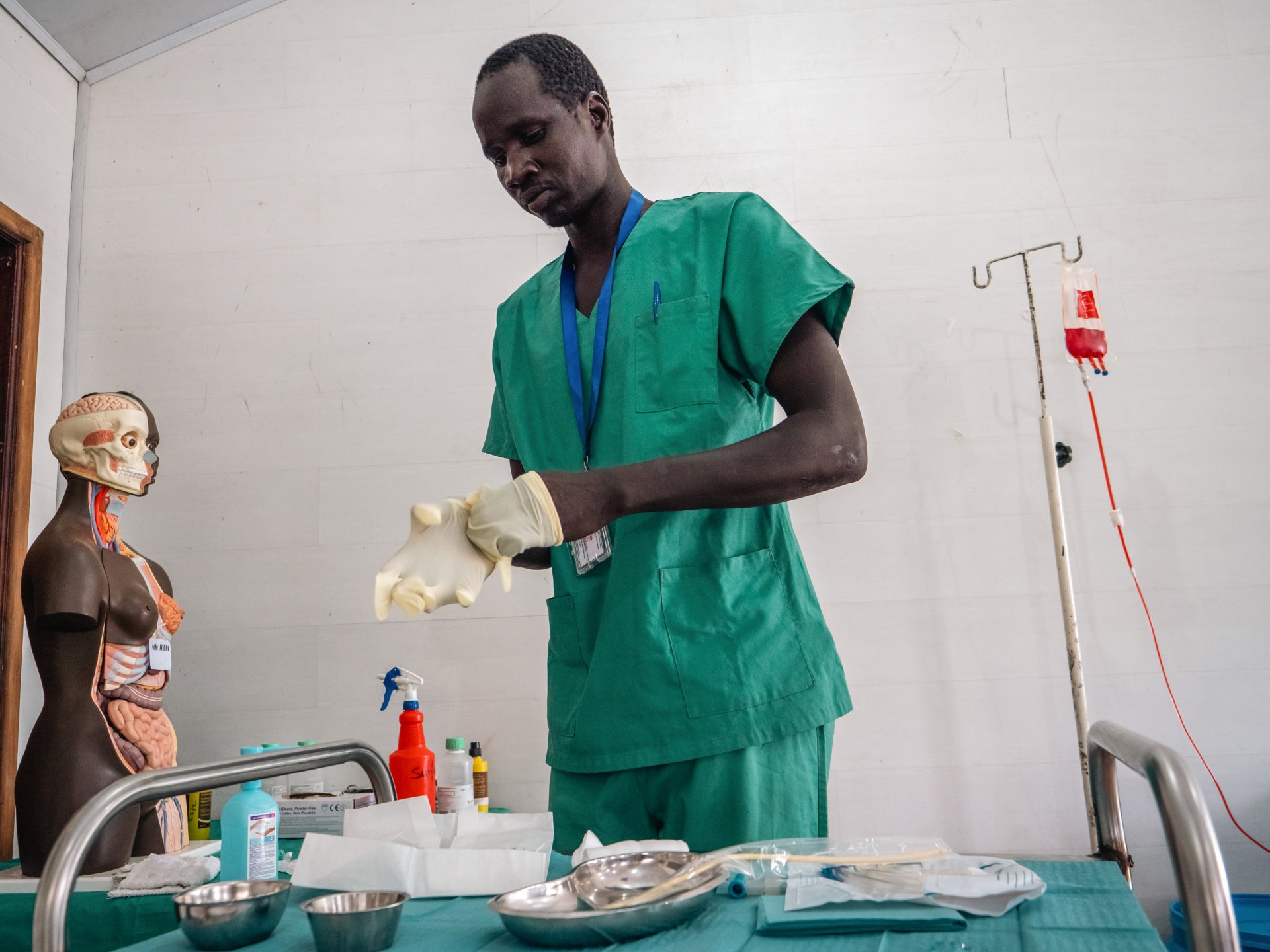
Examination gloves were found to be the most commonly used single-use medical item in MSF projects, with the highest environmental and financial impact. Gloves are essential when used correctly, but they are often worn unnecessarily. This generates avoidable waste and can also sometimes compromise patient safety.
To address this, MSF started to promote rational glove use. In Lebanon, MSF teams ran a “Wear With Care” campaign which saw glove use reduced by 40% per consultation without compromising safety, and demonstrated that better practices can protect both patients and the environment.
Rational Prescription of Intravenous Treatments
Intravenous lines constitute the second most impactful single-use item. Intravenous treatments typically require multiple single-use items, including syringes, needles, catheters, and infusion sets. A way to counter this is rational prescribing: switching from intravenous to oral treatments as soon as it is appropriate to do so. This improves patient safety and reduces infections, pain and prolonged hospital stays, while also significantly reducing plastic waste. It is recommended in MSF medical intensive care unit checklists.
Promoting Reusable Alternatives
Where sterilisation and laundry facilities are available, reusable alternatives to surgical equipment and gowns can safely replace single-use items without compromising the quality of patient care. In Mozambique and Kyrgyzstan, MSF started a pilot initiative to replace single-use surgical face masks with washable face masks that can be used up to 40 times. A life cycle assessment was carried out in partnership with the Technische Universität Berlin which showed that the washable mask significantly outperformed the single-use one from an environmental perspective. MSF staff also generally found the washable one was more comfortable to wear.
Why it matters
It will take time and effort to implement the changes needed in MSF – and the health sector at large. Plastic production and disposal represent a global health crisis and reducing unnecessary single-use plastics is vital to protect health, today and for future generations.